Sunday, 15 July 2012

Ten All-Canadian Road Trips

Road trips. Is there anything better than the liberation that accompanies feeling the wind blow through your fingers, or the freedom in standing in a place you’ve never once stood? People go on road trips of all shapes and sizes for different reasons: a break from the mundane daily routine, a family-centered journey to some magical far-away place, to seek adventure and inspiration, for solitude, and the list continues. Canada is one of the most road trip-worthy countries in the world, offering diverse vistas and itineraries sure to please anyone, from the anxious nomad to the novice homebody. In lieu of my past experiences tripping across the country, I’ve compiled a master list of the best places to go when the call of the road beckons. Just close your eyes and point. 

1) Cabot Trail

The legendary Cape Breton Island rests on the Northeastern point of Nova Scotia and is the crown jewel of Maritime Canadian destinations. Although the island occupies a large portion of the province, it’s most sought after destination is the Cape Breton Highlands National Park, situated at the edge of the province and only accessible by the world famous Cabot Trail, a 298 Kilometre loop that enters the park and runs through many small coastal communities. This roads gives you the best of both worlds: high mountainous ranges with winding switchbacks and rugged coastal shorelines like candy for the eyes. 

Recommended Stops: Check out the town of Ingonish, located on the Southwestern side of Cape Breton Highlands National Park, or relax on Ingonish beach 11 minutes South on the Cabot Trail at the opening of South Ingonish Harbour. The Cape Breton Highlands National Park Visitor’s Centre is located in Cheticamp on the South end of the Cabot Trail.

2) Gaspe Peninsula

At the mouth of the mighty St. Lawrence River in Southeastern Quebec lies the Gaspe Peninsula and, seemingly, the edge of the world. Highway 132 circumnavigates the peninsula and is a traveler’s best bet for experiencing French-Canada’s rural countryside. Sea cliffs and river tributaries mark the landscape like gorgeous blemishes in stark contrast to the ocean below. The Gaspe Peninsula is certainly a road trip you’ll want to take slowly.

Recommended Stops: The towns of Gaspe and Perce are popular destinations for this trip, both adding their own uniqueness to the rural French-Canadian culture. Be sure to visit the peninsula’s national parks as well: Gaspesie National Park, located on highway 299 off Sainte Anne des Monts on the Northern interior and Forillion National Park, located on highway 132 due North of Gaspe on the very tip of the peninsula. Also see: Cap-Des Rosiers Lighthouse, Bioparc De La Gaspesie and Bonaventure Island, all in Gaspe town-area for more awesome activities.

3) Muskoka Woods

Muskoka, Ontario is prime lake country, and the side-trip options are endless. Highway 60 is the main artery that runs through the small townships and parks of the area, and it literally carves through the hills of limestone and shale that serve as a foundation for lush boreal forests. The main attraction in the area, though, is none other than Algonquin Provincial Park, a place that requires no introduction. So, whether you’re into fishing, camping, sandy beaches on pristine lakes, heart-pumping hikes or just an opportunity to relax and soak in the unbridled wilderness, Muskoka Woods has it all. 

Recommended Stops: Besides Algonquin Park...Lake Simcoe, Kawartha Highlands and the Muskoka Lakes/Georgian Bay area are all fantastic options for adventure.

4)  Icefields Parkway

Alberta is known for either its two largest metropolitan destinations (Edmonton and Calgary) or its two largest parks (Jasper and Banff). Given the option, I’ll always choose the latter, primarily because its connector route, the Icefields Parkway, is a stunning road trip, albeit a small one (it only takes about 4 to 5 hours to travel). This scenic road actually follows a continental divide, allowing for great viewing opportunities of massive glacial valleys, hence the “Icefields” Parkway. 

Recommended Stops: Jasper and Banff.....Duh. But also take some time to hike or drive out to these other great locations: Sunshine Meadows, Vermillion Lakes, the Norquay Lookout, Maligne Canyon, Athabaska Falls and Bald Hills. Lake Louise is also another option right on the South end of the Parkway if you like being pampered a little more.

5) Sea to Sky Corridor

The Sea to Sky Highway was conveniently named for doing exactly what it does: taking you from sea level at British Columbia’s Horseshoe Bay to the high elevations of the Southern Rocky Mountain Range, eventually terminating in Pemberton where highway 99 will take you further North if you so choose. This is quintessential Rocky Mountains driving, winding in and out of ominous canyons and over rushing whirlpools, enough to either make you very excited or very carsick (or both). All in all, the Sea to Sky highway occupies a mere 135 kilometers of tar, but it packs a copious amount of epicness. 

Recommended Stops: Squamish will be the first main destination along the highway, and avid hikers wouldn’t want to miss an opportunity to summit the Squamish Chief. Whistler and Blackcomb Mounatins offer world-class skiing and snowboarding with resorts to satisfy the even the snobbiest of travellers. 

6) Sunshine Coast
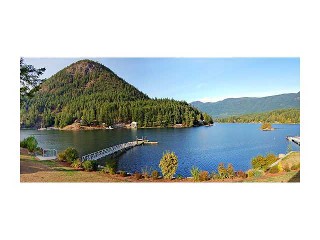
Ah, yes, it’s mid-summertime and all you can think of is white sandy beaches, the sun on your face and the waves crashing against your feet. What better place in Canada is escape to in the summer than Southwestern BC’s Sunshine Coast? Beginning in Horseshoe Bay, the Sunshine Coast Highway stretches North along the interior coast and passes the picturesque coastal towns and beaches of Earls Bay, Powell River and Gibsons, eventually hitting the end of the road in the tiny fishing village and wharf of Lund. The entire trip is 184 kilometers long and consists of two ferry crossings, just in case you forgot that you’re driving alongside an inlet of the largest ocean on earth. Beach bums beware, once you experience the Sunshine Coast, you may never want to leave. 

Recommended Stops: Plenty of stop-worthy settlements and beaches dot the highway, including Bowen Island, Nelson Island an Sechelt. Once in Lund, you have the option of Kayaking or chartering a boat into the unforgettable Desolation Sound, where hundreds of small coves and tide pools beg for exploration.   

7) Stewart-Cassiar 

You’re headed North now, in search of a more isolated journey, maybe to reconnect with nature or meditate the landscape. In Norhwestern Canada, plenty of options are available, but a trip you won’t want to miss is the Stewart-Cassiar Highway, spanning 752 kilometers from Kitwanga, BC to Watson Lake, Yukon Territory. The highway traverses over the Cassiar Mountain Range at the very Northern tip of the Rocky Mountains, gaining a total elevation of 2677 feet. The highway is well maintained year round and offers activities for every season, but the biggest draw to driving this itinerary is the raw and untamed wilderness you’ll encounter. Prepare for plenty of roadside animal sightings including Moose, Bison, Black Bears, the occasional Grizzly, Caribou, Red Fox and more. For all of its connection to the outside world, The Stewart-Cassiar is a perfect trip for the nature lover.

Recommended Stops: I recommend starting/ending your trip in Prince Rupert, BC’s Northernmost coastal town and just a short drive West of Terrace for its options to fish, paddle, hike or drive inland and across the breathtaking Queen Charlotte Islands. 

8) Liard-Yellowhead

The Northwest Territories are indeed Canada’s great beyond; a vast expanse of untouched land where few call home and even fewer seek to explore. Fortunately, for those that do, there are a couple of options to visit this magnificent place by land. One of those routes is the incredible Liard-Yellowhead highway, beginning just North of Fort Nelson, BC and ending in Yellowknife, the cosmopolitan capital city of NWT. It’s the journey of getting there, though that will make it worthwhile. The Liard-Yellowhead first traverses the great Nahanni Range just inside the NWT border before dropping down to the hundreds of lakes and tributaries of North-central Canada where vegetation is sparse and the views are spectacular. 

Recommended Stops: The Nahanni River National Park lies just inside the NWT border and is a very worthwhile day trip on the side. A few Aboriginal settlements along the way provide services and an opportunity to learn about Canada’s First Northern Peoples. These stops include Fort Liard, Fort Simpson and Fort Providence, in order from South to North. 

9) The Dempster Highway

If you’re seeking a true adventure and earth-shattering isolation, the Dempster Highway is your road trip. Starting just South of Dawson City, Yukon, the Dempster Highway follows a North-easterly route past the Arctic Circle and eventually stops in Inuvik, Northwest Territories. It is the furthest North one can travel by car while still inside Canada, and you’ll certainly know it as the Boreal Forest gives way to the Arctic Tundra and rolling mountains strip themselves of greenery, leaving a barren landscape that is all but devoid of activity. A word to the wise: The Dempster is notoriously tough-going, so make sure you get a full tune up and bring a couple of spare tires. You wouldn’t want to be stuck out in the land of the midnight sun. 

Recommended Stops: Dawson City is a preserved gold-rush era town where you can still play craps in an old casino and watch cancan girls on stage. At the very beginning of the highway is Tombstone Territorial Park, one of Yukons most treasured protected areas. Other than this, the only real stops you’ll encounter on this 12 hour trip will be Eagle Plains and Fort McPherson, both offering very basic services and amenities. Don’t forget to note when you’ve crossed the Arctic Circle – this is where 24 hour daylight or darkness occur during the summer and winter seasons. I recommend travelling during fall (last two weeks of August for this area) when the tundra comes alive with wonderfully vivid autumn colours. 

10) Trans-Canada

None of these road trips long enough for you? Don’t fret, you can drive across the entire freakin’ country if you take the incredible Trans-Canada Highway! Canada has plenty of road trips for everyone, most of which branch out of a highway that hits both oceans and traverses through four different ecosystems. The Trans-Canada highway actually has two different branches, both of which offer endless options for adventure, relaxation and discovery. So go on now, get road trippin’!!

Monday, 9 July 2012

Michael's Story


 "I was born in Toronto June 21st. 1935. Had an Irish mother and a British father. My education was mostly in Canadian Private schools as my father, after WW2, became a School Master. After I finished school in 1952 I went to Guernsey in the Channel Islands where my mother was living. I started work on a Dutch cargo boat taking tomatoes from Guernsey to Belfast in Northern Ireland. That was fun! I also rented out deck chairs at a beach. Finally, in 1955 after a quick trip back to Canada where I got a job with the Bell Telephone in Montreal, I returned to London and joined the Hong Kong Shanghai Bank – now HSBC – and was posted to Malasyia in ’57. While in London with the bank I also got interested in ballet along with my then girlfriend. Then, on the same day that the bank informed me of my posting to Singapore, that evening at ballet practice my teacher – Margaret Morris – asked me if I’d like to join a new ballet company – The Celtic Ballet - she was forming in Glasgow, Scotland! What a choice, and all on the same day! I chose the bank, as I knew my father would undo his nut if I chose the ballet, as he had been a strict military officer as well as a strict schoolmaster. I also wanted to live in other cultures and learn - but it was a hard decision. I worked in Singapore, Malaysia, Pakistan, the Caribbean and finally on Wall Street. Then I went to the Yukon in 1970.

It was my wonderful mother who opened my eyes to the spiritual path. That was on an island called Sark near Guernsey where she had taken me one beautiful day in 1952 to quietly introduce me to her spiritual insights. I embraced it immediately! Then when I went to London to the bank I connected with a spiritual group called the White Eagle Lodge. They were wonderful people and still exist. I also went overseas to Buddhist temples and learned from the monks, and also to Hindu temples for the same reason. Finally, I became a member of the Theosophical Society first founded by the Russian lady Helena Blavatsky in the 1880s. Wherever I went I always connected with spiritual groups with whom I felt comfortable. I learned much.

In the 1960s I had two special teachers who were a great influence on me. The first was the very well known Major Tudor Pole who worked with the King and Churchill during the war and who, at the time, was in Glastonbury, England, where my mother was. I was again on my 6 months home leave from the bank after another tour in Pakistan, and became intrigued in helping to restore the Chalice Well and Gardens there, which TP had started to do. He had a very powerful influence on me, although I didn’t entirely realise it at the time.

The other teacher was Namjyal Rinpoche whom I met when I returned to Toronto in 1967 having then changed banks and joined the Bank of Nova Scotia’s foreign staff in the Caribbean - Trinidad. When I went home on leave it was he who in 1970 influenced me to move to the Yukon and leave my banking profession. He had had a vision and knew that the northern lands of the earth would be the safest in these critical unfolding times as we pass between Ages.

 So, my first 10 years in the Yukon were living in the bush off and on where I built a log cabin and a greenhouse and survived very well - eventually with a loving and beautiful wife, and two children. Rinpoche actually came up with some students in 1977 and brought them to visit me in our bush home, which was 7 miles off the main road on a bush trail! It was, it seemed, his stamp of approval! He taught me so much. He passed from this life in 2003. He is greatly missed.

While in the Yukon I worked in real estate where I did quite well and was, at one point, in the top 100 in Canada out of 90,000 – not bad eh!  At one point I also worked in a local organic bakery called The Alpine Bakery.

I would also like to add that since I was 18 I have been a vegetarian, feeling that all life is sacred and a healthier way to eat. At 77 and still healthy I feel I have proven that. It is however important to eat organic foods otherwise your body cells do not get the nutrition they need. North Americans are the sickest people in the world and no one is asking why! The way to health is to look at the CAUSE of ill health not ‘cure’! Of course medical doctors have their place but I look to the Alternative health professionals first, and herbal cures before others.

I love the Yukon and its relative quiet and beauty, especially these days when you look out at a world going mad! For those who also recognise this unfolding crisis humanity is facing, here in Yukon would be a great area to live and be an example in which to demonstrate community living, while it – Yukon - still presents such pristine beauty and inspiration.

Thank you Aaron for this opportunity to share with others. Live Long and Prosper!  J  Michael."

Bloggers note: Michael Brine lives in Whitehorse, Yukon and has been a good friend of mine for over two years. When I asked him to share his incredible story, he graciously obliged and wrote this passage for my blog. Thank YOU Michael for sharing a small part of your life. What a wonderful picture you paint.

Michael Brine is currently a regular columnist for the Whitehorse Star and active blogger on the website Mission Ignition - Beyond the Box. He can also be contacted via email at wild.brine621@gmail.com.

Thursday, 28 June 2012

I'm an Environmentalist.

This is not a rant. I am writing on behalf of the hundreds who call themselves students of Environmental Studies; environmentalists, if you will. 

You see, we’ve been placed into a box – like many other folks pursuing certain academic things – and that box can be very limiting in terms of image and portrayal of this discipline, leading to more than a few prejudgements from those on the outside. I want to set the record straight. Right here, right now. There’s probably a lot of inaccuracies or - and I hate to use this word - ‘labels’ attached to us Environmental Studies students, but this is just a short list of the ideas other people have had about me during my four years in university. 

1)    I’m a hippy


Nothing against hippies, I’m just not one. On the contrary, identifying yourself as a ‘hippy’ is nothing to be ashamed about; hippies have pulled the human rights wagon further than most groups. At the height of the American Counterculture Movement during the 1960’s, these folks worked on having an incredibly positive impact in many places. If it weren’t for the ‘hippies’,  LGBTQ Rights, freedom of speech, anti-war campaigns and environmentalism wouldn’t be close to what we know and have today. 

And I wasn’t part of any of that. So please, stop calling me a hippie, and read a history book, or better yet watch Zeitgeist

2)    I am solely responsible for saving the world 

There’s a really scary word used by big businesses called externalities. It refers to the residual aspects of industry; the side effects of mining, lumber exports, building houses, global banking, etc. and, you probably guessed it, these externalities really mess things up. The damage caused by whatever means to create a product are often ignored because some people think that other interest groups will just take care of it.
According to this logic, I am part of this ‘other group’, solely because I will graduate in a year with a degree that flashes ‘here they come to save the dayyyyyyy!’ In rides the environmentalists on golden steeds, ready to fight for justice and make everything right again. It’s this kind of image that perpetuates thoughts like ‘somebody else will take care of this’ or rebuttals like ‘isn’t there people advocating for that already??’

Sometimes we ride in on golden crocodiles, too.
Take a good look back into history. The only time anything big and important ever got done, such as significant legislation enacted, human rights extended, wars ended, etc, it was because a multitude of people from a multitude of backgrounds came together over some commonality. Environmental Studies isn’t trying to breed a group of distinct individuals who will save the world from inevitable destruction, it is trying to create people who will bring more people together. So stop relying on me to fix everything. 

3)    I am going to work for Greenpeace/PITA

As I near the end of my time as an undergraduate student in university, I enter the realm of expectation I think all graduates-to-be transition into (whether we like it or not). It’s a period of your life when the apparent immaturity and carelessness of student life begins to fade and the adult you forms….As others may see it. Soon, a relentlessly annoying golden question will begin to crawl its way into your life: ‘So, what are you going to do with your (blank) degree after graduating?’

'Lets throw our hats to show how hopelessly unidirectional our lives are!'
I get it. Most people mean no harm with this question; it’s motivated by an unconscious desire to categorize and place you into a nice sounding career and/or lifestyle. You’ve just spent thousands of dollars and four years on a piece of paper, now do something with it. But it’s not that easy, and the answer, these days, won’t seem quite as sexy. In fact, there might not be an answer at all.

A large majority of my peers who have, or are about to, graduate university don’t have a very straightforward post-degree plan. Or if they do, it does not involve finding a permanent job and settling down. Contrary to this trend, I have literally had conversations with other people (sometimes other students) who have assumed I will end up working for Greenpeace when I graduate. Again, it’s that urge to find a poster child for every discipline, and then automatically tag the student to it. That way you won’t have to put any thought into the answer. Business majors have Pfizer, English majors will be teachers, and Fine Arts majors will be jobless (okay, maybe that last one is a tad bit accurate….). 

4)    I practice (inset random generic spiritual thing here)

Yoga. Meditation. Reiki. Tai Chi. Buddhism. Hoola Hooping. 

Whether I’ve practiced these things or not, it’s a bit unfair for one to assume that all Environmental Studies students know everything there is to know about vegetarianism or Jainism. It’s not like we synthesize every one of these activities by osmosis and default into Ghandi. I don’t even think I’d particularly like that. 

5)    I’m going to make you feel bad for eating that chicken. 

There is one thing I can say for sure about Environmental Studies students (at least the one’s at York), and that is there is much higher than average percentage of vegetarians in the program (I being one of them). It could be that a lot of the ideals we study foster this sense of stewardship, but then again it also gets challenged by many in our discipline at the same time. 

There’s this idea largely held by non-vegetarians that us herbivores make it our life mission to publicly shame others while they consume meat. What becomes misunderstood is that our dietary restrictions are for most of us veggies (and I hope I speak the truth on this) a personal choice. Meaning, it has nothing to do with your choices for eating meat. Meaning, you don’t have to ask us if we’re offended before you eat that leg of chicken. It’s okay, you can still be my friend.


Tuesday, 5 June 2012

Diagnosis: BUSHED


Have you ever started to read a book and, about three chapters in, realize that you are also playing the plot out in real life? Sometimes the right story will land in your hands and have important relevance to your life at that very moment. I have a habit of doing this.
Such was the case when, last April, I purchased Adventures in Solitude: What Not To Wear to a Nude Putluck and Other Stories from Desolation Sound by author and CBC Radio host Grant Lawrence. I figured it would be a good supplement to the trip I was about to take to the West, but wasn’t quite ready for how connected I would feel to Lawrence’s lifelong experiences in the remote Southern coastal destination of Desolation Sound. Now, I could probably write an entire post on how a dying breed of talk show hosts at CBC (Stuart McLean, George Stroumboulopoulos, Jian Ghomeshi) are carrying on the forgotten art of storytelling and proper interviews, but it’s safe to say that Grant Lawrence can be added to that list.
Lawrence’s award winning book stood out to me in one very poignant way: he framed his past at the Sound as both a physical and mental challenge, bringing to the forefront the idea that prolonged periods of isolation in sparsely populated areas can have serious psychological consequences. In fact, about half way through the book, Lawrence dives into the full details of what he refers to as ‘going bush’ (can you see the connections I’m drawing here?!?). According to the author, there are five stages of ‘going bush’: extreme loneliness; onset of depression; resentment; paranoia and eventually.....death. According to Lawrence, many individuals who lived in the Sound for years ended up committing suicide as a result of an inability to cope with ‘going bush’.
Exhibit A: Just another day in the bush.
 As I obviously have a tough time empathising with the final stage of ‘going bush’, I can certainly think of times while I was travelling that I experienced the other four to some degree. My other blog that I co-manage, Becoming Bushed, is dedicated to taking a humorous approach to the mental effects of living far away from anywhere, much like Lawrence does as he recounts his time at his father’s rustic cabin in Desolation Sound. All of this begs the question: should ‘going bush’ actually be considered a serious mental disorder?
My natural curiosity has led me to the internet, the source of all knowledge. Not surprisingly, it was difficult to find any dependable sources that would fully relate the idea of ‘going bush’ with a mental disorder, but I did find evidence of extreme isolation and social segregation which led to pre-existing mental health problems such as severe anxiety, manic depression and schizophrenia. Two major works on this topic are the books The Lonely American: Drifting Apart in the Twenty First Century (J.Olds, 2009) and From Antarctica to Outer Space: Life in Isolation and Confinement (A. Harrison, 1991). The former conducted scientific research to conclude that ‘Surprising new studies tell a grim truth about social isolation: being disconnected diminishes happiness, health, and longevity; increases aggression; and correlates with increasing rates of violent crime.’ (Olds, pg. 24). The data can be scary, but coping mechanisms exist.
In a world where the vast majority of people are moving to densely populated areas, the plight of the lonely traveller may be more pushed aside than ever. It is easy to detach yourself from friends and family back home while pursuing solitude, but it can be unhealthy at the same time. I’ve learned over my years of semi-nomadic living that it is important to always stay in tune with life outside of your immediate reality. One great way to achieve this is to start a blog, communicate with loved ones frequently, or read the news every morning. Always keep yourself and your head in check when you’re in the bush, or the bush controls you.....

Thursday, 24 May 2012

Six Things I've Learned Before Turning 24

This pretty much sums it up.


Last Thursday I turned 24, and, aside from battling a minor existential crisis, I’d say it went smashingly. Celebrating your birthday in a forest a few thousand miles away from your friends and family makes for a rather unorthodox occasion, but we made the best of it and now I’m another year older (how the hell did that happen?!?).

To be honest, since the tender age of 18 I’ve sort of given up on making a huge deal out of my birthday. Maybe it’s because since then I’ve spent the majority of them away from home or maybe, deep down, it’s because I’m just not fond of marking a day that only recognizes the fact that I’m getting older. In my experience, the mantra of age vs. wisdom is largely untrue, but then again, what do I know? I’m still relatively young, aren’t I? One thing I know for sure is you never stop learning. Which leads me to my first point:

The older you get, the less you know.            

I’m a sucker for quotes, and I try not to swamp my articles in them in fear of looking completely lame, but I have to include this one from Mr. Oscar Wilde: ‘I am not young enough to know everything’. If there’s anything I’ve learned after living for 24 years, it’s that I know nothing, and I don’t mean that in the I’m-an-idiot-and-incapable-of-doing-anything sense, but more so as an ode to the 99.99999% of things in this world I have no idea even exist. If you stop asking questions, being curious, and admitting to yourself that you have an infinite amount of learning ahead of you, you’ve reached the point of ignorance. It’s a nonstop cycle of finding answers that in turn generate five times as many questions, and we’ll never be able to understand everything, but that’s what makes it so much fun. You’ll become old when you think you’ve got it all.

Your thoughts are not your own.

Okay, without getting all mystically hippie on you, I’m going to try to explain this one in common sense terms. I learned this not a year ago and it was a major part of managing the onset of depression that could have been crippling otherwise. I’ve always been under the impression that whatever was going through my head was directly related to my self, that is who I am and the true person I have become (aka my core morals, values, outside relationships, etc). So, consequently, if I was having negative thoughts, I would feel horrible all day and I’d let it get in the way of what I wanted to accomplish. On the contrary, if I was experiencing lots of happy thoughts, I’d be in a great mood and life would be all tulips and roses and freakin’ rainbows and crap. While this part was great, I’d let my thoughts totally dictate my actions because I saw no separation between the two. Not until I realized that those often uncontrollable things that are trapped in my brain are actually completely different from the rest of my body, and I can learn to step outside of them and not let it control me. Of course, I’m still working on this, and it’s not always perfect. If you get good at this, though, you’ll actually begin to feel more mentally balanced and not have such dramatic ups and downs. This can have amazing benefits to your communicative abilities and intrapersonal relationships, not to mention your self-imagine will improve dramatically.

Your fears get bigger, and more real.

Seriously, who wouldn't be terrified??
When you were a wee child, the biggest fears you encountered included the monsters under your bed or whether or not tonight’s episode of America’s Funniest Home Videos was going to be new or a repeat. While I would never want to downplay the severity of these issues (I am still pretty sure I get visited by the Mad Hatter every night), they tend to change and morph over time into things that are more tangible and equally, if not substantially more intense. Adult fears can be debilitating - fear of change, fear of being hurt, fear of rejection – and we all face a point where we either allow our fears to control us or we do something we really fear. Although it can be awesome and even life changing to face a fear, it’s so much easier to not and to exist in our own little comfort bubble. Big fears are a big part of life, and we’ve all succumbed to ours at one point or another…Because we’re human and that’s just what happens, but to not pick ourselves up again is to do something you’ll probably regret later on.

Sometimes you’re wrong, and that’s OK.

Freakin' TANNINS, Jim. That's all I'm asking for.
Being born into my family means that, purely by default, you’re as stubborn as a door knob. Stubbornness is a funny thing; it can be incredibly advantageous yet completely destructive at the same time. I’ve gotten myself into more hairy situations that I’d like to admit thanks to this sometimes less favourable quality of mine, which made this lesson hardest to swallow. Growing up in a culture that has hard-wired competition and the value of always being right deep into my bones didn’t really help either, and I know I am certainly not alone on this. Hell, I will fight something I know isn’t true just to be the one who ends up on top. One of the hardest things you may ever have to do is mutter these two simple yet oh so painful words to another person: ‘I’m wrong’. It hurts the ego, makes us feel vulnerable and ashamed, and for us men it can be 180% emasculating, but it saves relationships. I’ve almost lost some of the most important people in my life over my inability to do this. Not being OK with being wrong can lead to quarrels over the simplest and most unimportant things – who didn’t take out the trash, which direction the bus stop is and whether the tannins in a well-aged cabernet merlot contribute to sweetness or bitterness on your palate (…just me?). Next time you’re in a heated debate heading hurtful with a loved one, step aside and ask yourself: ‘Is this worth ruining our relationship over?’. Being wrong can be so, so right.

Your bandwagon gets smaller. Much smaller.

Or too big. Whatever.
There’s no two ways around it: some adult decisions can just suck. Not necessarily because the outcome will suck, but because you know there can be a big difference between the choice you want to make and the choice that other people want you to make. You see, as you grow older, the things you want may be...How do I put it...Absolutely not what other people want for you. Throw in the fact that sometimes this includes those who are very close to you, like your best friend or your parents, and things get a little more complicated. Maybe the people who have supported you over the years (possibly financially or otherwise) are also part of the group that isn’t so quick to hop on your bandwagon. This can make things substantially more complicated. Many young adults are pressured into making decisions that they ultimately don’t want, all because they just want to make someone else happy. The only problem is that (shockingly) this usually won’t make YOU happy, and now you’re stuck living out someone else’s idea of what’s right for you. To avoid this, you’ll need to understand that staying true to your own desires can and probably will upset some people who are important to you, BUT that consequence is both temporary and won’t leave you with regrets and bitterness. Which nicely takes me to my final thought...

Be selfish.
The word selfish itself has taken on a really negative connotation, when really all it’s referring to is the ability to take care of oneself before looking outwards. As I’ve stated above, you need to stay in touch with what you want, regardless of who may think otherwise. Being selfish is just a counterpart to this important lesson, and is synonymous with the idea of self care. This is law of human emotional nature: if you want to care for others, you must care for yourself first. If you want to love others, you must love yourself first. I’ve seen too many friends or coworkers who attempt to bypass this rule in blatant disregard for their own health, and it’s a one way ticket to a total mental and physical burnout. At this point, you can render yourself useless in every regard, which can have negative impacts socially, at home and at work. SO do yourself a favour and BE SELFISH once in a while; it’s really the best thing for everyone.

Thursday, 10 May 2012

Six Undeniable Reasons to Travel the Alaska Highway to Whitehorse


Most people who travel Canada’s West will hang out closer to the national border, usually sticking to Vancouver Island and the coast or venturing into the ever popular Okanogan Valley for some wine and....old people? If you’ve never actually been past Prince George before, you’ll look at the mountains and think “gosh, Canada is such a beautiful, diverse country!”, or something else that’s bashfully endearing. While you wouldn’t be wrong with that sentiment, the Southern Rockies are certainly not the end-all-be-all of stunning mountain scenery and culture for us humble Canucks. Not by a long shot.

Usually, the way things tend to go when you’re travelling is that you have to make three times the effort to get to the places that make it worthwhile. Yes, Vancouver is pretty, but if you think you’ve seen Canada just because you spent a two week vacation in Whistler, you’d be quite terribly mistaken. Things become a lot more untamed after you’ve pointed yourself north, as I’ve done, and get to the Alaska Highway.

Mile 422 - Toad River Lodge
The Alaska Highway officially begins in Dawson Creek, BC (not to be confused with Dawson’s Creek, unless that show was about a group of biker outlaws fleeing a paper trail and working in an isolated industrial wasteland). This is the official ‘Mile 1’ of an ambitious project that would finally connect the Yukon and Alaska with the rest of Canada and the mainland. From Dawson Creek, the highway stretches north past Fort St. John and Fort Nelson, dotting small roadside stops on the way – each with their own unique character. A crown jewel amongst this journey, however, is Toad River Lodge, situated in between Summit Lake and Muncho Lake. The Northern Rocky Mountain Range begins to enfold you at this point, and at times it will seem as though you are a tiny spec treading through the land. Toad River Lodge is complete with a service station which boasts a collection of over 3000 hats, most of which were donated by travellers passing by. The ‘restaurant’ is usually occupied by friendly neighbours, lonesome truckers and the regularly scheduled Greyhound passengers en route to Whitehorse or somewhere in between. 

This is why their buisness is ahead.....Heheh.....

Mile 462 - Muncho Lake
A mere one hour’s drive northwest of Toad River on the Alaska Highway is Muncho Lake, the centerpiece of Muncho Lake Provincial Park. The highway will  skim the edge of the lake, an unforgettable sight as towering cliffs contrast the clear blue below. While you’ll feel dwarfed by the scenery, Muncho Lake is a place of serenity in the wild. It’s most startling attribute forms out of a special mix in natural chemicals that allow the lake’s water to appear crystal blue and translucent. This section of highway traverses the ‘Muncho Pass’, that is, the Northernmost range in the Rocky Mountains to be traversed by a highway. It is also arguably the most beautiful section of driving in BC.

 
Mile 497 - Liard River Hotsprings
Follow the Alaska Highway closer to the Yukon border and you’ll end up on the other end of the Muncho Pass, where an oasis of naturally heated spring water awaits. In Liard River Hotsprings Provincial Park, a boardwalk trail leads over a bog and into the overhanging canopy of lush boreal forest, complete with unique species of plants that are not found anywhere else in Canada. Two pools of blissfully hot water trickle into the overgrowth, creating a sanctuary for those who need a reprise from the road. You would probably forget you were in Canada if it wasn’t for the putrid smell of lingering sulfur in the air (kind of smells like rotten eggs). Nevertheless, Liard River Hotsprings are truly a must see on the Alaska Highway. 


Mile 597 – Watson Lake Signpost Forest
Watson Lake is the first real ‘town’ North of the BC/Yukon border on the Alaska Highway, and like many other roadside establishments in this end of the country, there’s not much too it. But the big claim to fame in Watson Lake is the Signpost Forest; an impressive collection of vintage licence plates, hand painted signs and road markings posted by passersby. Word on the dirt road has it a homesick U.S Army G.I by the name of Carl K. Lindley first nailed a sign in this location during the construction of the Alaska Highway in 1948 indicating the number of miles to his hometown. What Lindley didn’t know is that he would start a fad that is now well over 10, 000 signs strong. 


Mile 866 – Tagish Road to Carcross Desert
The wayward traveller is welcome to venture off the Alaska Highway and into more uncharted territory. Tagish Road, at Mile 866, is one such opportunity that reaps great rewards. Diverting an hour Southwest, Tagish Road eventually happens across the small community of Carcross, home to what many refer to as the World’s Smallest Desert. True, The Yukon Territory is probably the very, very last place you would expect to find a desert, but it’s there...All one square mile of it. The area itself was originally covered by a glacial lake, which then retreated, leaving its exposed sandy bottom behind. It was a very bad, very dirty glacier. Today, you can climb the dunes of the Carcross Desert and pretend you’re a tiny cowboy searching out the nearest scallywag for a tumble. If that’s what you’re in to. 


Mile 866 – Atlin Road
 If you’re feeling extra saucy, you can continue on past Carcross and ride South along the Klondike Highway to its terminus at Atlin, BC. Affectionately deemed The Little Switzerland of the North, Atlin is situated in the Torres Channel Mountain Pass, home to massive glaciers and gorgeous white-capped giants. The area was first occupied during the Gold Rush in 1898, but a few residents continue to live in the town year-round. If you’re searching for breathtaking scenery coupled with nature’s bounty, look no further. 


Friday, 20 April 2012

I've published a new blog!

Yeah, you heard right! Becoming Bushed is a new blog I've been working on with my partner Nikki Satira in anticipation for our departure to the West next Friday. Take a virtual bus ride, learn about Liard River and check out our bios! It's all there!

The link:

http://becomingbushed.wordpress.com/